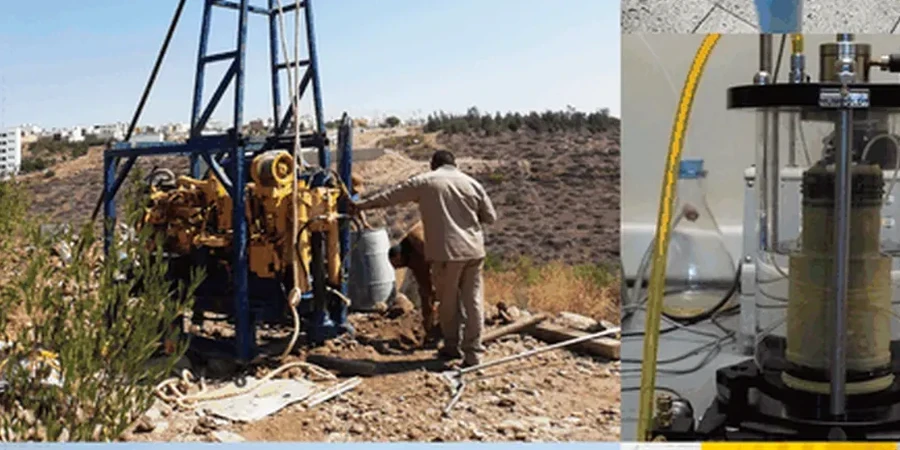
In Surrey, the transition from Fraser River floodplain to upland glacial deposits creates a patchwork of ground conditions that demand a nuanced approach to densification. The loose, saturated sands of the Nicomekl and Serpentine lowlands — at roughly 15 meters elevation near the coast — often fall below 40% relative density in their natural state. Our technical team approaches vibrocompaction design not as a generic prescription but as a site-specific response to these deposits: we correlate SPT blow counts below 10 with target densities above 70%, using the vibroflot grid derived from grain-size distribution and insitu void ratio. For sites near the Cloverdale uplands where gravel lenses interrupt the sand profile, the design must accommodate variable probe penetration and staged energy input. Early integration of a CPT test program refines the pre-treatment stratigraphy with continuous tip resistance and sleeve friction, while grain-size analysis confirms whether the fines content stays below the 12–15% threshold where vibro methods remain efficient.
Effective vibrocompaction design in Surrey hinges on mapping the pre-treatment void ratio and matching probe energy to the grain-size curve, not just on a target blow count.