GEOTECHNICALENGINEERING
SURREY
HomeSeismicBase isolation seismic design

Base Isolation Seismic Design in Surrey, BC

Technical studies that support your project.

LEARN MORE

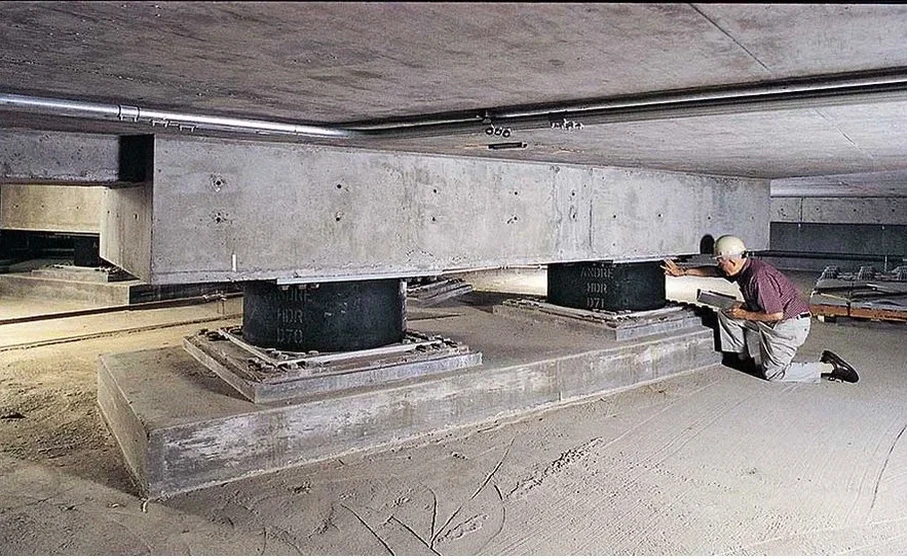
The soil profile in Surrey changes abruptly from the dense glacial till under Clayton Heights to the deep, soft silts and peats along the floodplain near Bridgeview. Designing a base isolation system without mapping these transitions is a gamble. A building on the uplands might see short, sharp shaking, while one sitting on 30 meters of compressible soil in the valley experiences a long-period, amplified motion that can push an isolator beyond its design displacement. We focus on the geotechnical inputs that feed the structural model: shear wave velocity profiles, basin edge effects, and the cyclic degradation of the marine clay that underlies much of the city center. This data shapes the selection between high-damping rubber bearings, lead-rubber bearings, or friction pendulum systems. For sites with marginal liquefaction potential, we often pair the isolation design with a targeted liquefaction assessment to confirm the ground won't lose stiffness under the isolators during a long-duration subduction event from the Cascadia zone.

Base isolation in Surrey is less about the bearing and more about the soil beneath it. A 900-mm displacement rating means nothing if the foundation tilts.
Our service areas

Our approach and scope

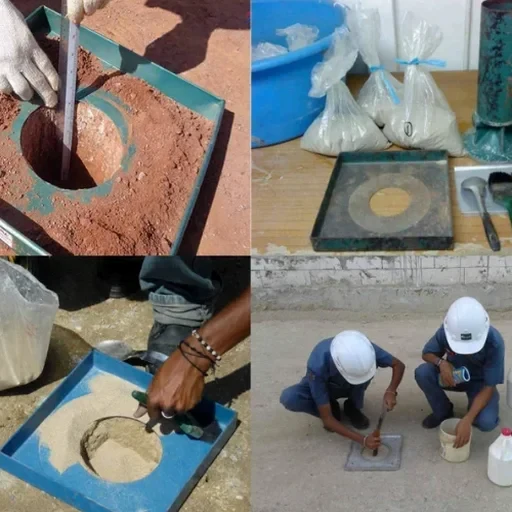
The physical backbone of our characterization work is a triaxial cell equipped with bender elements and a high-resolution linear variable differential transformer (LVDT) capable of measuring axial strain to 0.0001%. We extract Shelby tube samples from the target depth—usually the natural clay stratum right above the glacial till interface in Surrey—and subject them to staged cyclic triaxial loading that mimics the displacement history an isolator imposes on its foundation. The test sequence runs at frequencies as low as 0.01 Hz to capture the undrained creep behavior of the local marine clay. We also run resonant column tests on the same material to build a modulus reduction curve that the structural engineer plugs into their nonlinear time-history analysis. This lab program is complemented in the field by seismic refraction surveys that map the depth to the competent till across the site, because an isolator pad founded partly on till and partly on soft clay is a differential settlement problem waiting to happen.
Base Isolation Seismic Design in Surrey, BC
Technical reference — Surrey

Local ground factors

The Fraser River dominates Surrey's geography, and its floodplain deposits create a brutal contrast for seismic design. In the summer, the water table sits high, saturating the loose alluvial sands near the surface. During a major earthquake, those sands can liquefy within seconds, eliminating lateral support for the isolator pedestals. Winter brings a different problem: the heavy rainfall that swells the Nicomekl and Serpentine River basins raises pore pressures in the clay, softening the bearing stratum just when the structure needs maximum rotational restraint. Skipping a site-specific cyclic softening analysis means the isolation plane might not stay horizontal. A tilted isolator concentrates axial load on one edge of the bearing, reducing its energy dissipation capacity by half. We insist on running a CPT test to full depth on every Surrey isolation project—it's the only way to map the thin sand lenses within the clay that would otherwise go undetected in a standard borehole log.

Need a geotechnical assessment?

Reply within 24h.

Email: [email protected]

Reference standards

NBCC 2020 (National Building Code of Canada), CSA A23.3:19 (Design of Concrete Structures), ASTM D5311 (Cyclic Triaxial for Soils), ASTM D4015 (Resonant Column Test), CSA S832-14 (Seismic Risk Reduction of Operational and Functional Components)

Technical parameters

ParameterTypical value
Design ground motion (NBCC 2020)Site Class C, D, or E per shear wave velocity
Isolator displacement capacity400-900 mm (MCE level, Cascadia scenario)
Soil shear modulus at 0.1% strain (G0)Measured via bender elements in triaxial cell
Equivalent viscous damping ratio15-30% (high-damping rubber bearings)
Cyclic triaxial loading frequency0.01-0.1 Hz (matching fundamental period)
Minimum clear distance to property linePer Surrey Zoning By-law, typically 7.5 m
Foundation rotation toleranceLess than 0.005 rad under DBE

Frequently asked questions

What does a base isolation design package cost for a typical Surrey commercial building?

For a standard two-to-four-story commercial structure in Surrey, the geotechnical characterization and isolator design support typically runs between CA$5,170 and CA$11,320. The final figure depends on the number of borings or CPT soundings required, the depth to competent till, and how many cyclic triaxial tests are needed to characterize the foundation soil. A site on the soft clays near the Serpentine River will naturally require more lab work than one on the glacial uplands in Fleetwood.

How does NBCC 2020 affect base isolation design in Surrey?

NBCC 2020 requires that isolated structures in high seismic zones like Surrey be designed for a 2% in 50-year probability event, which for the Lower Mainland includes both crustal and subduction sources. The code mandates a minimum isolator displacement capacity based on site-specific spectra, and we have to demonstrate that the soil under the isolation plane remains stable at that displacement. The Surrey soil profile—often a Site Class D or E—amplifies the long-period motion, so the isolation period must be pushed beyond 3.0 seconds to be effective.

Can you retrofit an existing Surrey building with base isolators?

Yes, but it requires careful staging. We typically start with a full geophysical survey using MASW and seismic refraction to map the foundation soil without disturbing the existing footings. Then we core through the slab to collect samples for cyclic testing. The isolator pedestals are constructed sequentially, and we monitor settlement with precision leveling throughout. The main challenge in Surrey is the high water table—dewatering is almost always required during the excavation phase for the new isolation plane.

What type of isolator works best for Surrey's soil conditions?

It depends entirely on the site-specific soil profile. On the dense till of South Surrey, friction pendulum systems work well because the high bearing stiffness minimizes residual displacement. But in the deep clay basins around Whalley and the city center, we usually recommend lead-rubber bearings with a high damping ratio—they can accommodate the larger displacements from the amplified ground motion without needing a massive moat. The final choice comes from the nonlinear time-history analysis, not a catalog selection.

Location and service area

We serve projects in Surrey and surrounding areas.

View larger map