GEOTECHNICALENGINEERING
SURREY
HomeRoadwayRigid pavement design

Rigid Pavement Design in Surrey, BC — Engineering for the Fraser Valley’s Soil Challenges

Technical studies that support your project.

LEARN MORE

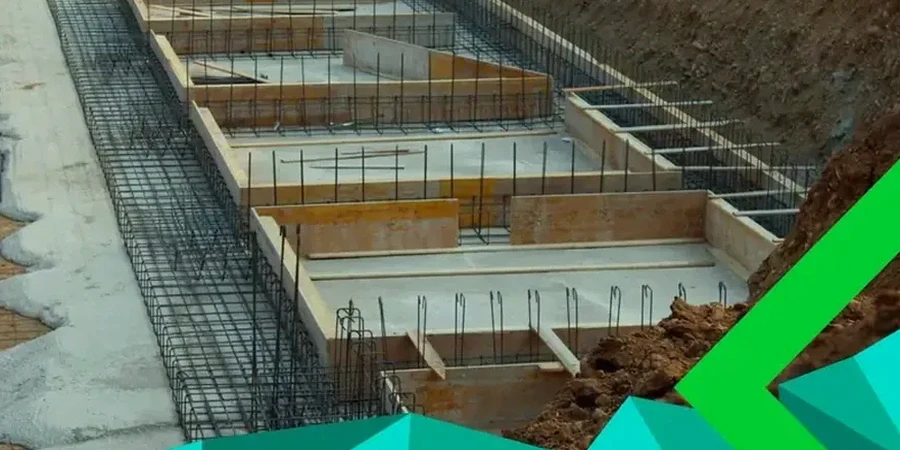
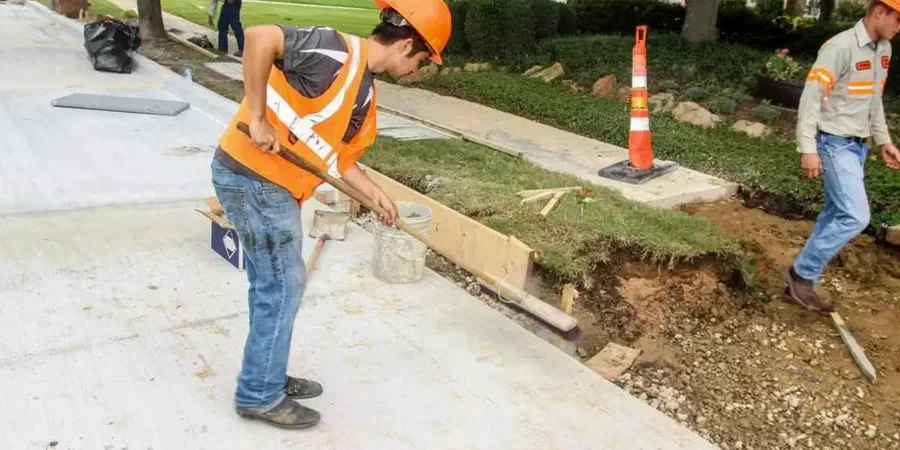
The slip-form paver inches forward, its hopper full of 32 MPa concrete, extruding a continuous slab behind it as the vibrator pods consolidate the mix into a uniform mass. On a Surrey commercial site near the trucking corridors of Port Kells, the machine’s pace is dictated by the subgrade — a silty-clay till that’s been proof-rolled, tested with a plate-load test to confirm modulus, then capped with a well-graded granular base. Rigid pavement design in this part of the Lower Mainland is a balancing act: the slab has to handle container-trailer loading, seasonal moisture swings in the upper soil horizon, and the long-term settlement pattern typical of the Fraser Valley’s glacially-deposited soils. We approach every Surrey job by first characterizing the formation to a depth of at least 2 metres, then building a finite-element model that accounts for axle loads, curling stresses, and the joint layout that will govern the pavement’s service life.

Pavement thickness isn’t a guess. In Surrey’s variable glacial till, it’s a calculation that combines CBR values, traffic spectra, and joint efficiency — and if you skip the subgrade investigation, the slab tells the story within two seasons.
Our service areas

Our approach and scope

The mistake we see repeatedly in Surrey’s expanding industrial zones — Campbell Heights, South Westminster, Bridgeview — is treating the concrete slab as a standalone element. Contractors will pour a uniform 200 mm thickness across a site without accounting for the transition from the drier upland till to the compressible organic silts that underlie the lower benches. The result shows up within two winters: corner breaks radiating from doweled joints, faulting at transverse contraction joints, and pumping of the subgrade fines through longitudinal cracks. To avoid this, we integrate the CBR road investigation data directly into the structural design, vary the slab thickness and the reinforcement ratio zone by zone, and specify load-transfer mechanisms — tie bars at longitudinal joints, smooth dowels at contraction joints — that keep the panels working together under heavy braking and turning loads. The mix design itself gets attention too: we match the coarse aggregate type (usually Fraser River gravels) and the air-void system to the exposure class, ensuring freeze-thaw durability through Surrey’s wet January-to-March period.
Rigid Pavement Design in Surrey, BC — Engineering for the Fraser Valley’s Soil Challenges
Technical reference — Surrey

Local ground factors

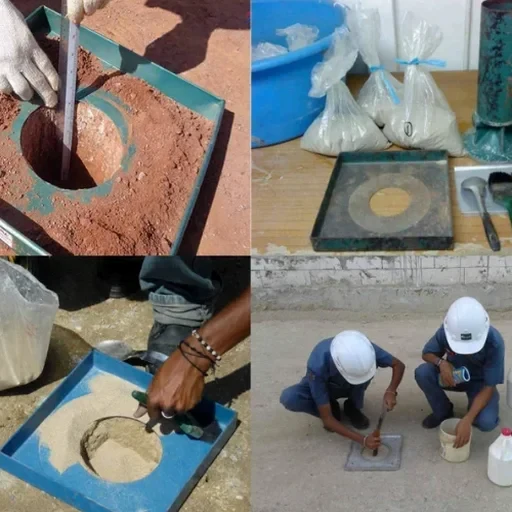
The subgrade contrast between two Surrey neighbourhoods illustrates the risk. In the upland areas around Fleetwood, the underlying Vashon till is dense, overconsolidated, and drains reasonably well — a pavement designer can work with soaked CBR values in the 5–8% range and expect consistent support. Drive 15 minutes west into Bridgeview, where the near-surface soils are alluvial silts and organic clays deposited by the Fraser River, and the same CBR can drop below 2%. Without a site-specific in-situ permeability assessment and a proper subgrade treatment strategy — lime stabilization, geogrid-reinforced base, or in some cases a vibrocompaction programme — the slab becomes a brittle raft bridging pockets of weak material. Differential settlement opens joints, water infiltrates, and the pumping action under repeated truck loads erodes the base in a feedback loop that shortens the pavement’s functional life from 25 years to perhaps 8. Surrey’s geology doesn’t allow a one-size-fits-all pavement section; every site demands its own subgrade story.

Need a geotechnical assessment?

Reply within 24h.

Email: [email protected]

Reference standards

CSA A23.1/A23.2 — Concrete materials and methods of concrete construction / Concrete test methods, NBCC (National Building Code of Canada) Part 4 — Structural Design, referenced for foundation and slab-on-grade provisions, PCA EB204 — Thickness Design for Concrete Highway and Street Pavements (industry standard adopted across Canada), ASTM C143/C143M — Standard Test Method for Slump of Hydraulic-Cement Concrete (used for on-site quality control), MTO Laboratory Testing Manual LS-700 series — referenced for aggregate quality and grain-size distribution of base materials

Technical parameters

ParameterTypical value
Standard design methodPCA (Portland Cement Association) thickness design procedure / AASHTO 93 rigid pavement method
Reference standard for concrete materialsCSA A23.1/A23.2 — Concrete materials and methods of concrete construction
Typical slab thickness range (industrial/commercial)175 mm to 275 mm for heavy-duty yards, depending on traffic index and subgrade CBR
Joint spacing for unreinforced slabs3.5 m to 4.5 m (maximum 24 times slab thickness, per PCA guidelines)
Subgrade characterization requiredCBR (soaked) at formation level, resilient modulus (Mr) for mechanistic-empirical design, soil classification per USCS
Load-transfer efficiency at contraction jointsSmooth dowel bars Ø 25 mm to 32 mm at 300 mm centres, greased on one end
Base/subbase requirementsMinimum 150 mm crushed granular base (19 mm minus) over proof-rolled subgrade; thicker if frost-susceptible soils present

Frequently asked questions

What is the cost range for a rigid pavement design in Surrey?

For a typical commercial or industrial site in Surrey, the engineering design package — including subgrade investigation, thickness calculation, joint plan, and construction specifications — generally falls between CA$2,810 and CA$7,580. The final figure depends on the yard area, the number of soil investigation points required, and the complexity of the joint layout.

How does Surrey’s soil affect rigid pavement performance?

Surrey sits on a mix of glacial till (Vashon Drift) in the uplands and compressible alluvial silts and clays along the Fraser River floodplain. The till provides decent support with drained CBR values of 5–12%, but the lowland soils can drop below 2% CBR and are prone to seasonal moisture changes. Without proper subgrade treatment and a conservative base thickness, differential heave and settlement will crack the slab at the joints.

Which joint types do you specify for Surrey industrial pavements?

We specify contraction joints with smooth dowel bars at 300 mm centres for load transfer, longitudinal joints with deformed tie bars to prevent lane separation, and isolation joints where the slab abuts building foundations, loading docks, or drainage structures. Joint spacing follows PCA guidelines (typically 24 times the slab thickness, with an aspect ratio not exceeding 1.25). All joints are sealed with a silicone or preformed compression seal to keep out surface water and incompressibles.

Do you handle both the design and the field testing during construction?

Yes. Beyond the design phase, our team can provide on-site quality control during the pour: slump and air-content testing per CSA A23.2, beam fabrication for flexural strength verification, and subgrade proof-rolling inspection. We also review the contractor’s joint saw-cutting schedule to ensure the timing window respects the concrete’s setting characteristics under Surrey’s ambient temperature and humidity conditions.

Location and service area

We serve projects in Surrey and surrounding areas.

View larger map