GEOTECHNICALENGINEERING
SURREY
HomeUnderground ExcavationsGeotechnical analysis for soft soil tunnels

Geotechnical Analysis for Soft Soil Tunnels in Surrey, BC

Technical studies that support your project.

LEARN MORE

Surrey sits atop the deep, compressible silts and clays of the Fraser River delta—deposits that can exceed 100 meters in thickness before reaching competent till. Water tables here are notoriously high, often just 1.5 meters below the surface in the lowlands, creating fully saturated conditions that complicate any underground excavation. With a population surpassing 600,000 and major transit expansions like the SkyTrain extension driving tunneling demand, understanding the undrained shear strength and consolidation behavior of these marine clays is not optional. A proper soft ground tunnel analysis in Surrey must account for face stability in soils where SPT N-values frequently sit below 4 in the upper 20 meters. We approach each profile by first defining the pre-consolidation pressure and sensitivity of the local clay, because misjudging these parameters leads straight to settlement claims and damaged infrastructure above.

In Surrey's deltaic clays, a 2% error in estimating the undrained shear strength can shift the predicted settlement trough width by 30 meters.
Our service areas

Our approach and scope

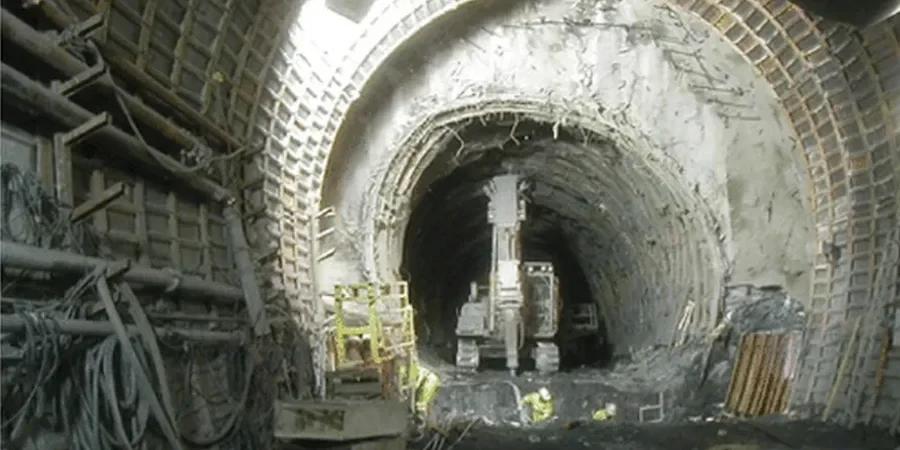
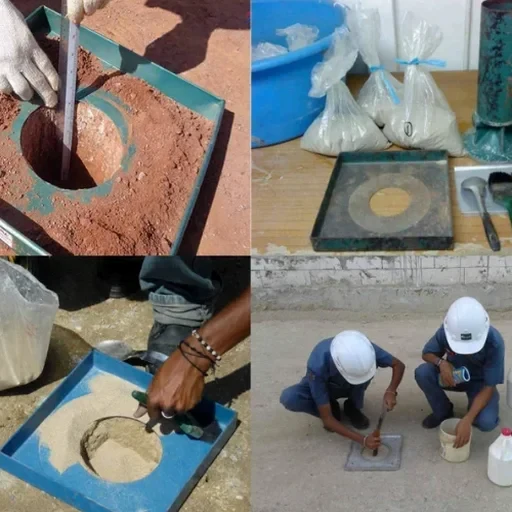
Surrey's transformation from a patchwork of farming communities into Metro Vancouver's largest city by area has pushed infrastructure into terrain that previous generations simply avoided. The City Centre and Fleetwood corridors overlay thick sequences of Salish and Capilano sediments, where the clay's liquidity index often hovers near 1.0, meaning the material behaves almost like a viscous fluid when disturbed. Our investigation program for soft ground tunnels integrates in-situ vane shear testing to capture peak and remolded strengths, combined with high-quality piston sampling for laboratory consolidation and triaxial testing. We correlate these results with CPTu pore pressure dissipation data to map the coefficient of consolidation across the alignment—critical for predicting the time-dependent settlement trough that develops behind a TBM. Without this resolution, even a well-executed earth pressure balance drive can trigger excessive surface settlement in Surrey's sensitive clays.
Geotechnical Analysis for Soft Soil Tunnels in Surrey, BC
Technical reference — Surrey

Local ground factors

Under the 2020 British Columbia Building Code and referenced NBCC seismic provisions, Surrey falls within a high seismic hazard zone—peak ground accelerations on Site Class E soils can amplify significantly beyond the firm-ground reference values. The biggest threat in soft ground tunneling here is not just collapse, but cyclic softening and post-earthquake settlement. A tunnel lining designed for static overburden alone can fail if the surrounding clay loses strength during a crustal or subduction-zone event. We evaluate the potential for strength degradation using cyclic direct simple shear (DSS) tests on undisturbed samples, feeding those parameters directly into deformation models. Without this data, the lining design remains blind to the 50-year and 2,475-year return period demands that govern infrastructure in Surrey.

Need a geotechnical assessment?

Reply within 24h.

Email: [email protected]

Reference standards

NBCC 2020 (National Building Code of Canada, seismic provisions for Site Class E), CSA A23.3:19 (Design of concrete structures, durability requirements for buried elements), ASTM D4767-11 (Consolidated undrained triaxial compression test for cohesive soils), ASTM D6528-17 (Consolidated undrained direct simple shear testing of fine-grained soils)

Technical parameters

ParameterTypical value
Undrained shear strength (Su) from FVST15–45 kPa (upper 25 m)
Sensitivity (St) of deltaic clay4–12
Coefficient of consolidation (cv)0.8–3.5 m²/year
Plasticity Index (PI)18–35%
Groundwater level (lowlands)0.8–2.5 m below grade
N-value (SPT, uncorrected)Weight of hammer, typically 2–8 blows/300 mm
Face pressure target (EPB)80–180 kPa at tunnel axis

Frequently asked questions

What is the typical cost range for a soft ground tunnel geotechnical investigation in Surrey?

Depending on the number of boreholes, depth of the tunnel alignment, and the laboratory testing scope, a comprehensive investigation for a soft ground tunnel in Surrey generally falls between CA$5,660 and CA$20,110. This range covers field vane testing, piston sampling, consolidation and triaxial tests, and a factual data report with interpreted parameters.

Which soil parameters matter most for EPB tunnel face stability in Surrey clays?

The undrained shear strength (Su) profile, soil sensitivity (St), and the pore pressure response during shear are the three critical inputs. Surrey's deltaic clays often show contractive behavior, meaning excess pore pressures build at the face and reduce the effective stress, widening the potential failure wedge.

How do you account for seismic demands on a tunnel in Surrey's soft soils?

We run cyclic direct simple shear tests on undisturbed samples to measure the degradation of shear modulus and the generation of excess pore pressure under the design earthquake accelerations from the NBCC 2020. These results go into a soil-structure interaction model to check lining ovaling and post-earthquake settlement.

Can you investigate the tunnel alignment without disrupting traffic in Surrey?

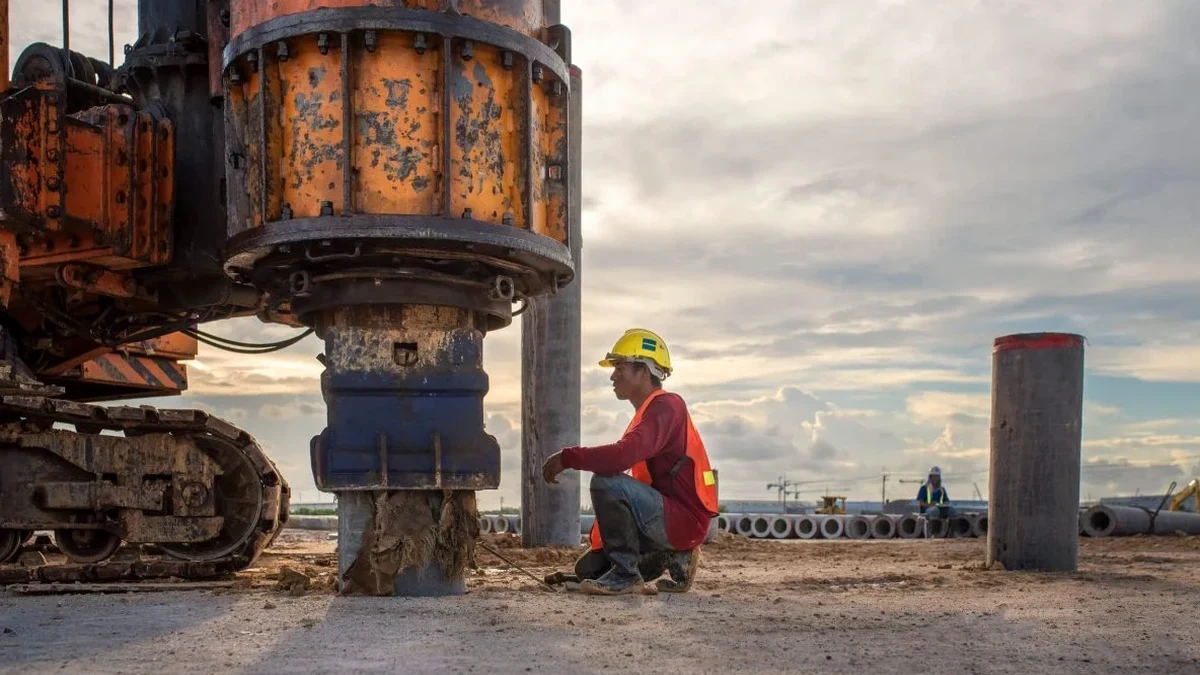
Yes, we use a tracked CPTu rig and portable field vane equipment that can access medians, boulevards, and even rail corridors with minimal footprint. For deeper investigation, we mobilize a compact auger rig that sets up in a single lane closure, keeping disruption to a few hours per location.

Location and service area

We serve projects in Surrey and surrounding areas.

View larger map