GEOTECHNICALENGINEERING
SURREY
HomeFoundationsRaft/mat foundation design

Raft/Mat Foundation Design in Surrey, BC: Geotechnical Considerations for Fraser Valley Soils

Technical studies that support your project.

LEARN MORE

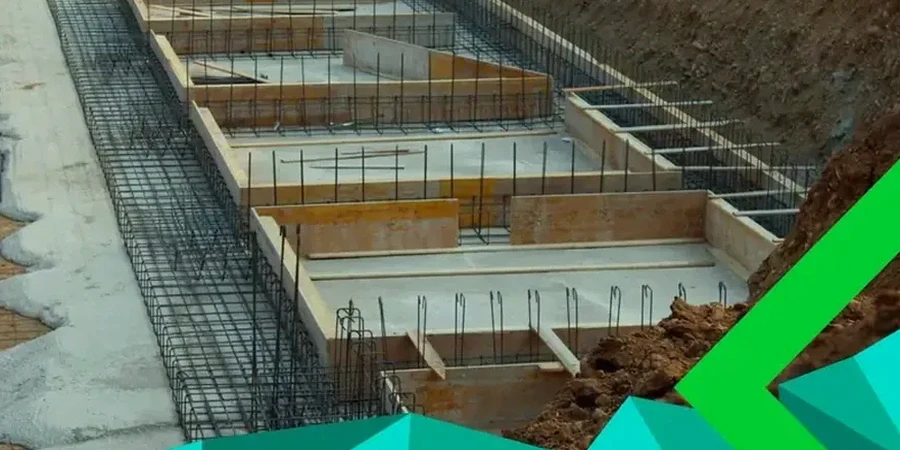
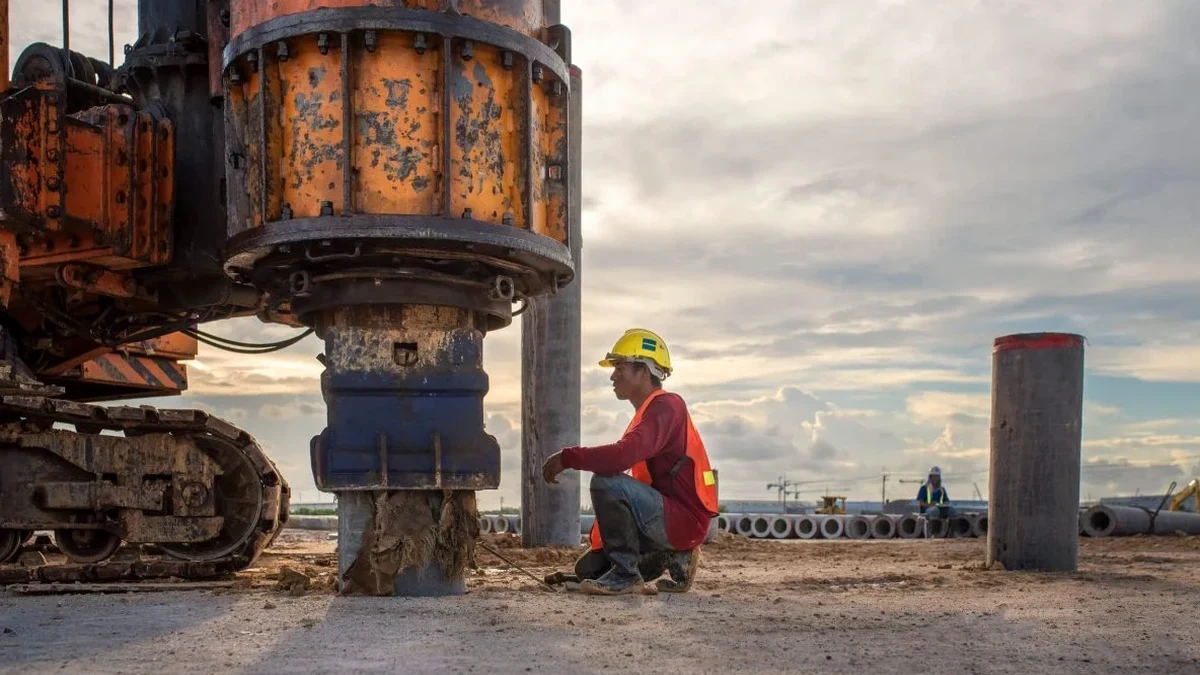
Surrey sits on a complex glacial and post-glacial landscape where the Fraser River has deposited deep sequences of compressible silts and clays over the past ten thousand years. The city’s population, now exceeding 600,000, drives continuous residential and commercial development onto soils that can settle unevenly under heavy structural loads. A raft or mat foundation becomes the practical choice when isolated footings would be too large or would experience excessive differential movement. The 2020 National Building Code of Canada places Surrey in seismic zone 4, meaning every foundation design must account for significant lateral shaking. MASW testing helps map shear wave velocities across a site, giving our engineers the data needed to model soil-structure interaction accurately. In areas near the Serpentine and Nicomekl rivers, where soft organic silts extend ten to twenty metres deep, we often recommend crossing site data with a CPT test to resolve thin drainage layers that affect consolidation time. These combined approaches let us tailor the mat geometry and reinforcement to Surrey’s actual subsurface, not just textbook assumptions.

In Surrey’s Fraser River floodplain, a properly designed mat foundation bridges soft compressible silts and reduces differential settlement to levels that isolated footings simply cannot achieve.
Our service areas

Our approach and scope

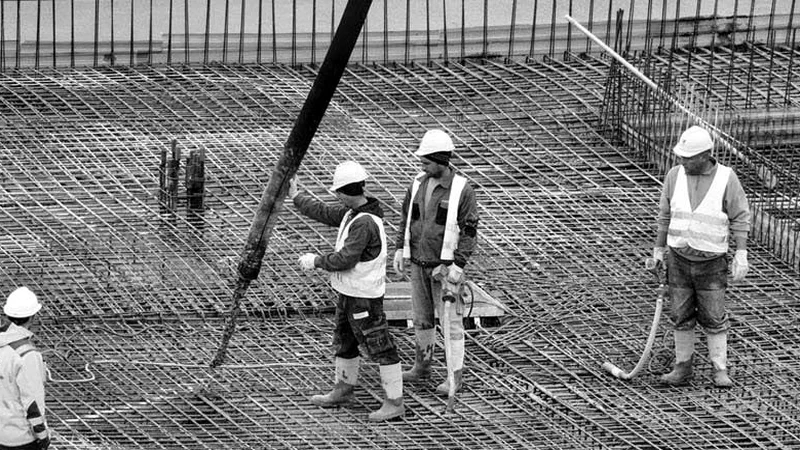
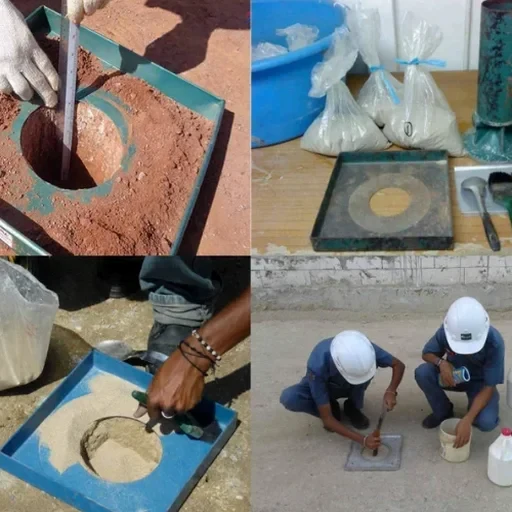
Foundation behavior varies noticeably between South Surrey’s upland till deposits and the low-lying peat basins around Newton and Cloverdale. In the White Rock-South Surrey corridor, dense glacial till often sits within two to five metres of ground surface, providing a stiff bearing stratum that limits long-term settlement. A mat here may be designed primarily for seismic overturning and wall line loads rather than for settlement control. Move north into the Fraser floodplain, and the profile shifts dramatically: ten to twenty metres of normally consolidated silt and clay overlie deep ablation till, and groundwater is frequently within one metre of grade during winter months. The mat foundation in Surrey’s central and eastern neighbourhoods must function as a rigid plate that bridges soft zones while keeping total and differential settlement within NBCC tolerable limits. Construction dewatering becomes a critical sequencing issue, and we coordinate the geotechnical recommendations with the civil drainage plan. When fill is required, we specify engineered granular material placed and compacted under observation, sometimes verifying density with a sand cone density test on the prepared subgrade before blinding concrete is poured. Reinforcement detailing then reflects both the bending moments calculated from subgrade reaction models and the minimum temperature steel required by CSA A23.3.
Raft/Mat Foundation Design in Surrey, BC: Geotechnical Considerations for Fraser Valley Soils
Technical reference — Surrey

Local ground factors

The NBCC 2020 requires that foundations on compressible soils be designed for both bearing capacity and total/differential settlement under serviceability limit states, and in Surrey the differential settlement risk is often the governing factor. A mat foundation stiffens the entire footprint, but if the underlying clay thickness varies abruptly across a site, the mat can tilt, crack, or distress partition walls. Post-earthquake performance is another concern: the fine-grained soils in the Fraser delta can lose strength under cyclic loading, and while Surrey’s clay-rich deposits are generally less susceptible to flow liquefaction than loose sands, cyclic softening can still amplify foundation rocking. Our team runs finite-element models that incorporate site-specific modulus degradation curves, and we compare the results against the NBCC’s inter-storey drift limits. When a risk screening flags potential for strength loss, we discuss ground improvement options such as vibrocompaction for granular lenses or staged preloading with wick drains for the clay profile. Ignoring these mechanisms leads to costly post-occupancy repairs, and in Surrey’s competitive real estate market, a foundation defect discovered during a strata depreciation report can erase significant property value.

Need a geotechnical assessment?

Reply within 24h.

Email: [email protected]

Video overview

Reference standards

NBCC 2020 (National Building Code of Canada), Division B, Part 4, CSA A23.3:19 Design of concrete structures, CSA S6:19 Canadian Highway Bridge Design Code (for geotechnical resistance factors), ASTM D2487 Standard Practice for Classification of Soils, ASTM D1194/D1194M Standard Test Method for Bearing Capacity of Soil for Static Load on Spread Footings

Technical parameters

ParameterTypical value
Typical bearing stratumGlacial till (upland) to normally consolidated silt/clay (floodplain)
Undrained shear strength (floodplain clay)20 to 60 kPa in upper 10 m
Depth to competent till (upland areas)2 to 5 m
Groundwater depth (winter, floodplain)0.5 to 1.5 m below grade
Seismic design spectral acceleration Sa(0.2)0.95 (NBCC 2020, Site Class C reference)
Typical total settlement under mat (floodplain)25 to 75 mm (post-construction, with preload)
Concrete strength class specified30 to 40 MPa (CSA A23.3 exposure class C-1 or F-1)

Frequently asked questions

What is the typical cost range for a raft or mat foundation design package in Surrey?

For a single-family or small multi-family lot in Surrey, the geotechnical investigation and design package for a mat foundation typically falls between CA$1,590 and CA$6,470, depending on the number of boreholes, the depth of the compressible layer, and whether CPT or geophysical testing is added. Larger commercial projects that require three-dimensional finite-element modelling and long-term settlement monitoring will be at the upper end or beyond that range. Each quote is prepared after we review the architectural plans and the site’s geomorphic setting.

How does a mat foundation perform during an earthquake in Surrey’s seismic zone?

A mat foundation behaves as a rigid body that translates and rocks with the ground motion, distributing inertial forces across a large contact area. In Surrey’s seismic zone 4, we design the mat thickness and reinforcement to resist both the overturning moment from the superstructure and the kinematic soil-structure interaction. Site-specific response spectra and a liquefaction or cyclic softening assessment are mandatory under NBCC 2020, and where sensitive clay is present, we incorporate a gravel drainage blanket beneath the mat to prevent pore-pressure buildup.

How long does it take from site investigation to receiving the final mat foundation design?

A typical schedule for a single-building project in Surrey runs four to six weeks from mobilization. The first week covers fieldwork: drilling, CPT soundings, and sampling. Two weeks are then dedicated to laboratory testing, including one-dimensional consolidation and unconsolidated-undrained triaxial tests on the clay samples. The remaining two to three weeks are for analysis, report preparation, and a coordination meeting with the structural engineer to finalize reinforcement detailing and subgrade preparation specifications.

Location and service area

We serve projects in Surrey and surrounding areas.

View larger map