GEOTECHNICALENGINEERING
SURREY
HomeSlopes & WallsSlope stability analysis

Slope Stability Analysis in Surrey

Technical studies that support your project.

LEARN MORE

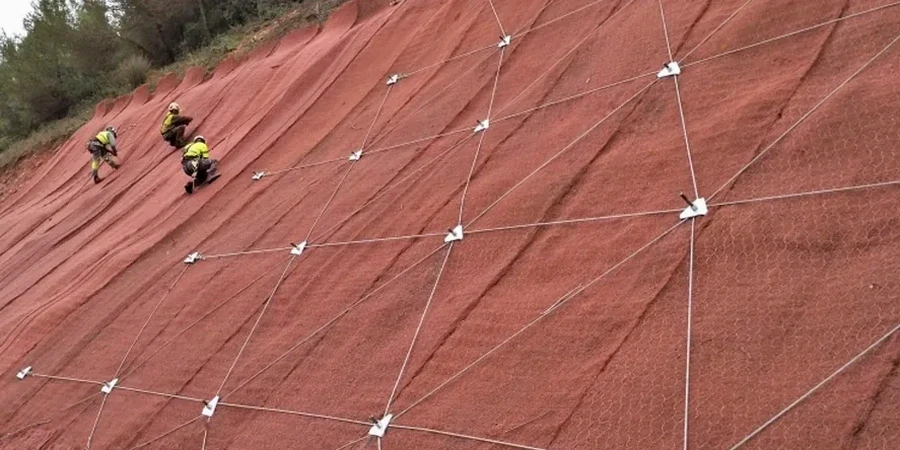
Surrey sits on a complex mix of glacial till, marine clay, and alluvial deposits. Every heavy rain season we see small slips on the bluffs overlooking the Nicomekl River. A proper slope stability analysis is not just a permit requirement—it is the only way to know if your cut or fill will hold up over time. Our team runs limit equilibrium models using site-specific soil parameters from Surrey’s varied geology. We avoid generic assumptions. For deep-seated failures in the upland areas, we often recommend combining this with a stone columns investigation when weak compressible layers are found at depth. The analysis defines the factor of safety for static and seismic conditions, giving you a clear picture of what reinforcement or drainage is needed.

In Surrey’s transitional geology, relying on a single shear strength value is a dangerous oversimplification.
Our service areas

Our approach and scope

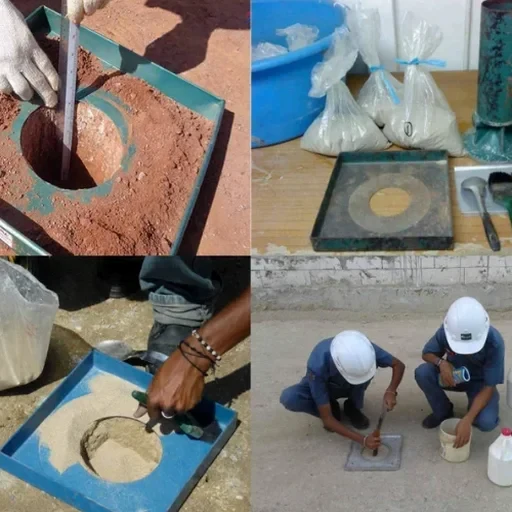
Glacial till in North Surrey can be stiff and overconsolidated, but pockets of soft, sensitive marine clay exist near the Serpentine River basin. That contrast creates a classic setup for progressive failure. A slope stability analysis here must capture both peak and residual shear strengths. Our lab runs direct shear and triaxial tests following ASTM D3080 and D4767 to get those parameters right. We model pore water pressure build-up under Surrey’s average 1,500 mm of annual rainfall. The analysis includes a detailed review of stratigraphy from boreholes or test pits. It also accounts for surcharge loads from adjacent structures. We provide clear output showing the critical slip surface and the recommended drainage design or regrading strategy to meet the 1.5 safety factor required by local practice.
Slope Stability Analysis in Surrey
Technical reference — Surrey

Local ground factors

The most common mistake in Surrey is treating a slope cut like a simple 2:1 excavation without analyzing the groundwater. A contractor digs into the till and hits a sand lens with perched water. Within hours, the face slumps. That emergency repair costs ten times what a slope stability analysis would have. Another error is ignoring the creep potential in the marine clays near the flats. A slope can stand for months and then fail without warning after a wet week. Our analysis crosses that gap. We map the phreatic surface, test the soil’s sensitivity, and run rapid drawdown scenarios if you are near the river. No surprises.

Need a geotechnical assessment?

Reply within 24h.

Email: [email protected]

Reference standards

NBCC 2020 (Division B, Part 4), ASTM D3080 (Direct Shear), ASTM D4767 (Triaxial Compression), CSA A23.3 (Anchoring and reinforcement), ASTM D1586 (Standard Penetration Test)

Technical parameters

ParameterTypical value
Minimum Static Factor of Safety1.5
Seismic Factor of Safety (NBCC)1.1
Peak Friction Angle (Glacial Till)28° to 38°
Residual Strength (Sensitive Clay)As low as 8°
Annual Rainfall Considered1,500 mm
Groundwater ModelingSteady-state and transient
Analysis MethodSpencer and Morgenstern-Price

Frequently asked questions

What does a slope stability analysis for Surrey cost?

The cost ranges from CA$1,530 for a simple cut in dry till to CA$5,550 for a complex analysis involving transient groundwater modeling and seismic loading near the Nicomekl or Serpentine floodplains.

When is a slope stability analysis required in Surrey?

It is typically required for cuts over 1.2 meters, fills over 1.5 meters, or any excavation within a distance equal to the slope height from a property line or right-of-way. The City of Surrey geotechnical review policy enforces this under the Building Bylaw.

What soil tests are needed for the analysis?

We need undisturbed samples for triaxial and direct shear tests. Disturbed samples are used for Atterberg Limits and grain size classification. A minimum of one borehole or test pit per slope face is standard.

Does the analysis include earthquake loading?

Yes. Surrey is in a high seismic zone. We apply the pseudo-static coefficients from NBCC 2020 to ensure the slope maintains a minimum factor of safety of 1.1 during the design earthquake.

Location and service area

We serve projects in Surrey and surrounding areas.

View larger map